
TruSculpt iD vs. GLP 1 Weight Loss Medications: Do You Still Need Body Contouring?
Losing weight used to be the finish line. Today, many people are discovering that it can be just one part of the journey.
GLP 1 medications such as semaglutide and tirzepatide have changed the conversation around medical weight management. These medications can help eligible patients achieve significant weight loss when used under medical supervision. Clinical trials have demonstrated substantial reductions in body weight with both medications.
But there is an important question that often comes next.
If you lose significant weight with a GLP 1 medication, do you still need body contouring?
The answer depends on what you want to change.
Weight loss and body contouring are not the same thing. One focuses on reducing overall body weight. The other focuses on improving the shape and appearance of specific areas.
That distinction is where treatments such as TruSculpt® iD may have a role.
What Do GLP 1 Weight Loss Medications Actually Do?
GLP 1 medications are prescription treatments used for specific medical conditions, including obesity and overweight with certain health risks.
Semaglutide and tirzepatide work through hormone pathways that influence appetite and food intake. They can help people eat less and achieve meaningful weight loss when combined with appropriate lifestyle changes.
The results can be significant.
In a large 68 week clinical trial, adults with overweight or obesity who received semaglutide 2.4 mg along with lifestyle intervention experienced an average weight reduction of 14.9 percent, compared with 2.4 percent with placebo.
Tirzepatide has also produced substantial weight reduction in clinical research. In a 72 week trial, average weight loss ranged from 15 percent to 20.9 percent depending on the dose, compared with 3.1 percent with placebo.
Those numbers help explain why GLP 1 medications have become such an important option in modern weight management.
However, there is a catch.
A lower number on the scale does not automatically mean every area of your body will look exactly the way you want.
Your body did not receive the memo about your preferred shape.
Weight Loss and Body Contouring Solve Different Problems
This is the easiest way to understand the difference.
GLP 1 medication helps address overall weight management.
Body contouring helps address specific areas of shape and contour.
Imagine someone loses 40 pounds. Their overall health and body weight may improve significantly, but they may still notice a stubborn area around the abdomen or flanks.
That does not necessarily mean the weight loss failed.
It may simply mean that localized fat and body shape respond differently from overall weight.
The American Society of Plastic Surgeons explains that substantial weight loss can also leave some people with loose or sagging skin because the skin and underlying tissues may not completely conform to the body’s reduced size.
This is one reason body contouring can remain relevant after weight loss.
What Is TruSculpt iD?
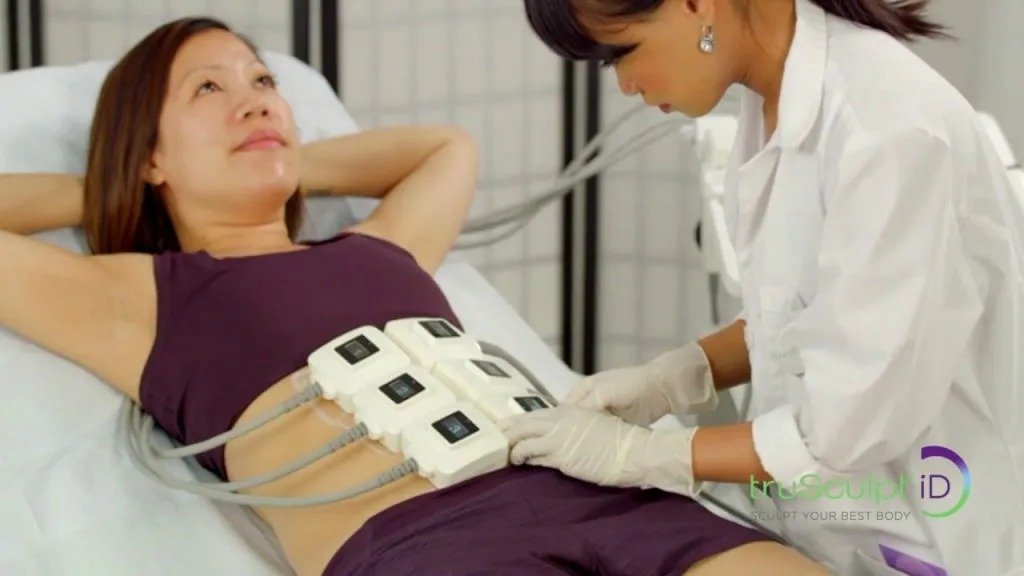
TruSculpt® iD is a noninvasive body sculpting technology from Cutera that uses monopolar radiofrequency energy.
Rather than treating weight throughout the entire body, the technology targets the subcutaneous fat layer in selected areas.
Cutera describes truSculpt as a personalized body sculpting platform designed for areas including the abdomen and flanks. Its current product information also cites an average 24 percent fat reduction based on clinical research.
The FDA database also lists truSculpt iD as a Class II medical device, with a 510(k) clearance for the device.
That does not mean TruSculpt® iD is a weight loss medication.
It is not.
The purpose is different.
TruSculpt® iD vs. GLP 1 Medications
The easiest comparison is to look at what each treatment is designed to accomplish.
GLP 1 Medications
GLP 1 medications are medical treatments that can help eligible patients manage obesity or overweight and achieve overall weight reduction.
They work systemically, meaning they influence appetite and metabolism throughout the body.
Their primary goal is medical weight management.
TruSculpt® iD
TruSculpt® iD is a noninvasive body contouring treatment designed to target localized areas of subcutaneous fat.
It does not replace a healthy diet, exercise program, or medically appropriate weight management treatment.
Its purpose is more specific.
It can be considered when someone is closer to their desired weight but still wants to address particular areas of their body.
So comparing the two as if they are competing weight loss treatments is not entirely accurate.
They are solving different problems.
Can You Use TruSculpt® iD After GLP 1 Weight Loss?
For some people, yes.
But timing and patient selection matter.
If someone is actively losing a significant amount of weight, it may make more sense to first establish a stable weight and then evaluate what areas still concern them.
Why?
Because your body can continue changing while you lose weight.
Treating a specific area too early may make it difficult to judge your final contour.
Once weight becomes more stable, a qualified provider can assess whether the remaining concern involves localized fat, skin laxity, or another issue.
That distinction matters because different concerns require different approaches.
Why Some People Still Consider Body Contouring After Weight Loss
Imagine reaching your weight goal and looking in the mirror.
The scale says, “Congratulations.”
Your jeans say, “We need to talk.”
That situation can happen because body weight and body shape are not identical.
Someone can have a healthy or improved body weight while still noticing areas they would like to refine.
Common concerns can include:
Stubborn Abdominal Fat
The abdomen can remain a concern even after substantial weight loss.
Flank Fat
Some people continue to notice localized fullness around the sides of the waist.
Changes in Body Proportions
Losing weight can change body proportions, sometimes making certain areas more noticeable.
Skin Laxity
Significant weight loss can leave loose skin in some people. Noninvasive contouring is not the same as surgical skin removal, so expectations need to remain realistic.
This is why a consultation should focus on the actual problem rather than automatically recommending a particular treatment.
Does TruSculpt® iD Cause Weight Loss?
This is an important distinction.
TruSculpt® iD is not a substitute for medical weight loss treatment.
Its purpose is localized body sculpting rather than reducing overall body weight.
Cutera describes the technology as treating the subcutaneous fat layer and targeting areas such as the abdomen and flanks.
If someone needs significant weight reduction, medical weight management may be more appropriate.
If someone has already made substantial progress and has a localized area they want to refine, body contouring may be worth discussing.
In other words, do not expect a body contouring treatment to do the job of a weight management program.
That would be like asking a tailor to lose 30 pounds for you. Great with measurements, terrible with metabolism.
What About Loose Skin After GLP 1 Weight Loss?
This deserves special attention.
Fat reduction and skin tightening are not the same thing.
After significant weight loss, some people develop loose skin because the skin may not fully contract around the body’s smaller size. The American Society of Plastic Surgeons recognizes excess or sagging skin as a common concern after major weight loss.
TruSculpt® iD should therefore not be marketed as a replacement for surgical procedures designed to remove substantial excess skin.
A medical professional needs to determine whether a patient’s main concern involves localized fat, skin laxity, or both.
That evaluation helps set realistic expectations.
Should You Stop Your GLP 1 Medication Before Body Contouring?
Do not stop or change a prescription medication simply because you are considering an aesthetic treatment.
Your medical weight management plan should come from the healthcare professional managing your medication.
GLP 1 medications also have potential side effects and prescribing considerations. For example, clinical trials of semaglutide and tirzepatide reported gastrointestinal side effects such as nausea, diarrhea, vomiting, or constipation.
If you are considering body contouring while taking a GLP 1 medication, tell your provider what medication you use, the dose, and any symptoms you are experiencing.
That information helps the provider determine whether treatment is appropriate and when it should be performed.
What About Compounded GLP 1 Medications?
This is another area where patients should be careful.
The FDA states that compounded drugs are not FDA approved and do not undergo the same FDA premarket review for safety, effectiveness, and quality as approved medications. The agency has also reported concerns involving dosing errors and adverse events associated with compounded semaglutide and tirzepatide.
If you are considering a GLP 1 medication, discuss the options with a qualified healthcare professional and make sure you understand exactly what medication you are receiving.
A cheaper shortcut is not always a smarter shortcut.
When Might Body Contouring Make Sense?
There is no universal rule that says every person who loses weight with a GLP 1 medication needs body contouring.
You may want to discuss it with a qualified provider if:
- You are close to your desired weight
- Your weight has become relatively stable
- You have a localized area of unwanted fat
- Diet and exercise have already helped you make substantial progress
- You want to refine your body shape rather than achieve major weight loss
- You understand that noninvasive contouring has different capabilities from surgery
A consultation should focus on your anatomy, goals, medical history, current weight, and expectations.
A Combined Approach May Make More Sense
For some patients, the most logical approach is not GLP 1 medication versus body contouring.
It may be GLP 1 medication and then, when appropriate, body contouring.
The first treatment addresses overall weight management.
The second can address selected areas that remain after weight loss.
This approach makes sense because the treatments have different purposes.
It also prevents a common mistake: expecting one treatment to solve every body concern.
The Bottom Line
GLP 1 medications and TruSculpt® iD are not interchangeable treatments.
GLP 1 medications can help eligible patients achieve meaningful overall weight loss. Clinical trials with semaglutide and tirzepatide have demonstrated substantial reductions in body weight.
TruSculpt® iD takes a different approach. It uses monopolar radiofrequency technology for noninvasive body sculpting and targets localized areas of subcutaneous fat.
So, do you still need body contouring after GLP 1 weight loss?
Not necessarily.
But if you have reached a more stable weight and still have specific areas that you would like to refine, body contouring may be worth discussing with a qualified provider.
The goal should not be to chase a smaller number on the scale forever.
The goal is to build a healthier body while making sure your expectations, treatment choices, and desired results all line up.
And sometimes, after doing the hard work of losing weight, you simply want your body shape to reflect the progress you have already made.
Categories

Categories










Get Updates:
Lightstim post microneedlinghttps://t.co/OY5xpFFjgs pic.twitter.com/57WMJwr2LD
— Miami Aesthetic Institute (@Miami_Aesthetic) January 8, 2020